Thanks to the recognized skills of its researchers and support staff, cutting-edge technology platforms and fruitful collaborations with national research organizations (CNRS, INRAe, IRD, etc.) and international partners,université Savoie Mont Blanc makesa visible contribution to the production and dissemination of knowledge to meet the scientific and societal challenges of today and tomorrow.
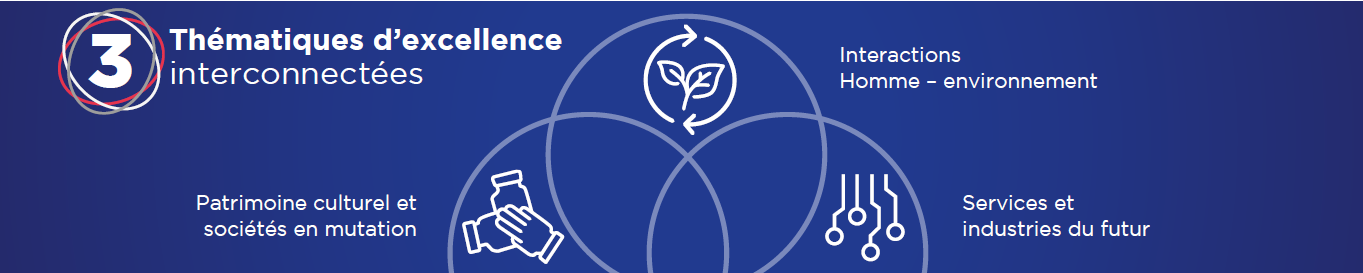
It specializes in three interconnected areas of excellence:
Research figures
Research at USMB means :
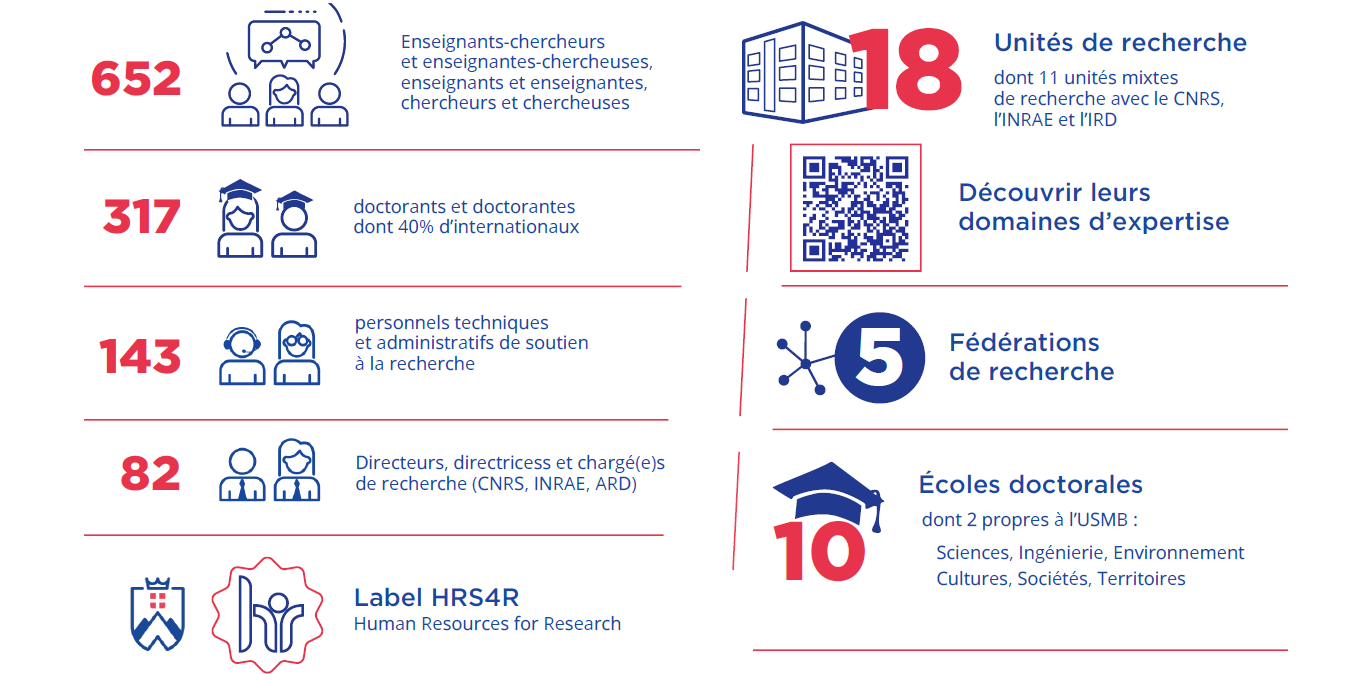
Télécharger l’infographie en pdf « La recherche à l’USMB » (données année 2023)
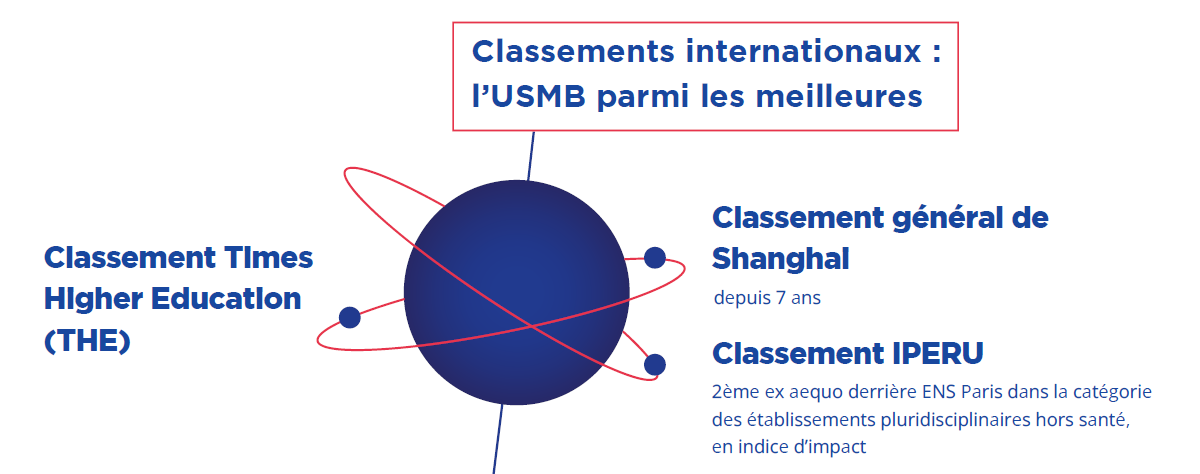
International rankings
Ranked in the Shanghai ranking for the 7th year running thanks to the excellence of its research,université Savoie Mont Blanc confirms its place among the best and joins the prestigious Times Higher Education (THE) international ranking for the year 2025. In the same year, the USMB also features in THE's new international ranking, theInterdisciplinary Science Rankings 2025international rankings, placing it in the top third of universities worldwide. (December 2024 data)
Discover research at USMB
- Laboratories and expertise
- Talents and discoveries
- Scientific output and research projects
- Innovation and valorization of research
- Open science and scientific culture for the general public
- Doctorate and HDR